Reflection

This page records a structured reflection on creating my teaching portfolio using Gibbs’ Reflective Cycle (1988), capturing what happened, my reactions, evaluations, analysis, conclusions, and an actionable plan to improve my clinical teaching practice.

Description (What happened?)

Preparing this teaching portfolio was a new experience for me as an Assistant Medical Officer, who has until now focused more on clinical practice than pedagogical documentation. I was asked to collect evidence, articulate my teaching philosophy, and reflect on my teaching in a structured document — a task that felt challenging at first but ultimately became a meaningful journey of self-discovery.


The process involved revisiting my teaching experiences with housemen and medical students in clinical settings and outlining my vision and objectives as an educator.
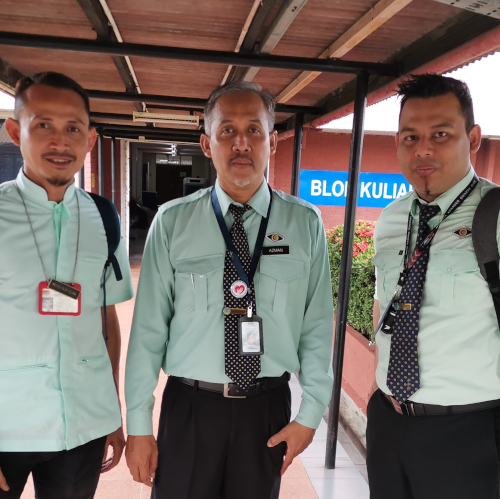
IMG-20161104-WA0003_small_cropped
Reflective practice is the ability to reflect on one's actions so as to engage in a process of continuous learning.
— Donald Schon
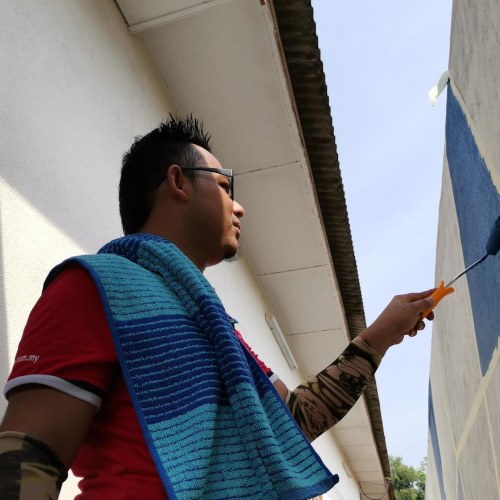
20240928_153047_small_cropped
Good teaching is more a giving of right questions than a giving of right answers.
— Josef Albers

Feelings (What do I feel?)

At the beginning I felt uncertain — were my clinical experiences sufficient to form a formal teaching portfolio? I often asked myself, “Am I entitled to be called an ‘educator’?”


However, as I began to write honestly about my teaching moments — each ward round, each case discussion with house officers, each time I demonstrated a clinical procedure — I realised that teaching has long been part of who I am, even without the formal title of “educator.” This recognition brought renewed confidence.

Evaluation (What is good and can be improved?)

What went well:

  • Reflection helped me identify my teaching strengths, especially the ability to use real clinical cases as learning tools.
  • Compiling the portfolio forced me to think systematically about my philosophy, objectives, and direction as a teacher.
  • I feel better prepared to continue my Master in Medical Education with clearer self-understanding.

What can be improved:

  • My teaching has often been unstructured and undocumented — there are no official records of sessions or written feedback from learners.
  • I need to begin collecting tangible evidence of my teaching, such as session logs, learner evaluations, and teaching materials.
20260612_115251_small_cropped
Seeking knowledge is obligatory upon every Muslim.
— Prophet Muhammad ﷺ (Sunan Ibn Majah 224)
In teaching you cannot see the fruit of a day's work. It is invisible and remains so, maybe for twenty years.
— Jacques Barzun
IMG-20260614-WA0002_small_cropped
Education is not preparation for life; education is life itself.
— John Dewey
Whoever takes a path upon which to obtain knowledge, Allah makes the path to Paradise easy for him.
— Prophet Muhammad ﷺ

Analysis (What can be gained?)

Preparing this portfolio taught me that reflection is central to a teacher’s growth.


As John Dewey observed,

We do not learn from experience... we learn from reflecting on experience.
— John Dewey

I also realised that the gap between clinical practice and formal pedagogy can be bridged — and this portfolio is a first step. With a background in clinical medicine and ongoing study in Medical Education, I am well placed to contribute to health professions education.

Conclusion

I conclude that a teaching portfolio is more than a document — it is a mirror of an educator’s professional journey. If I had started this process earlier, I would have documented clinical teaching sessions more diligently. I should also solicit regular feedback from students and colleagues to improve my teaching approach.
IMG_20240905_102414_small_cropped
Seeking knowledge is obligatory upon every Muslim.
— Prophet Muhammad ﷺ (Sunan Ibn Majah 224)
In teaching you cannot see the fruit of a day's work. It is invisible and remains so, maybe for twenty years.
— Jacques Barzun
IMG_20200301_105043_small_cropped
Tell me and I forget, teach me and I may remember, involve me and I learn.
— Benjamin Franklin
Whoever goes out seeking knowledge, then he is in Allah's cause until he returns.
— Prophet Muhammad ﷺ

Action Plan

Based on this reflection, I commit to on executing the following action plans:


Documentation of lessons


Begin documenting teaching sessions — recording date, topic, number of learners, and methods used after each session.


Feedback collection


Collect ongoing feedback from housemen and medical students using simple forms or apps.


Application of findings


Integrate findings from my Master’s research on EPA into daily clinical teaching.


Portfolio update


Update this portfolio at least annually as a record of continuous professional development.


Formal mentorship


Seek formal mentorship through clinical educator mentorship or faculty development programs to further enhance my pedagogical competence.


The more that you read, the more things you will know. The more that you learn, the more places you'll go.
— Dr. Seuss

This portfolio is a beginning — not a conclusion — to my journey as a clinical educator.